Wheel balancing
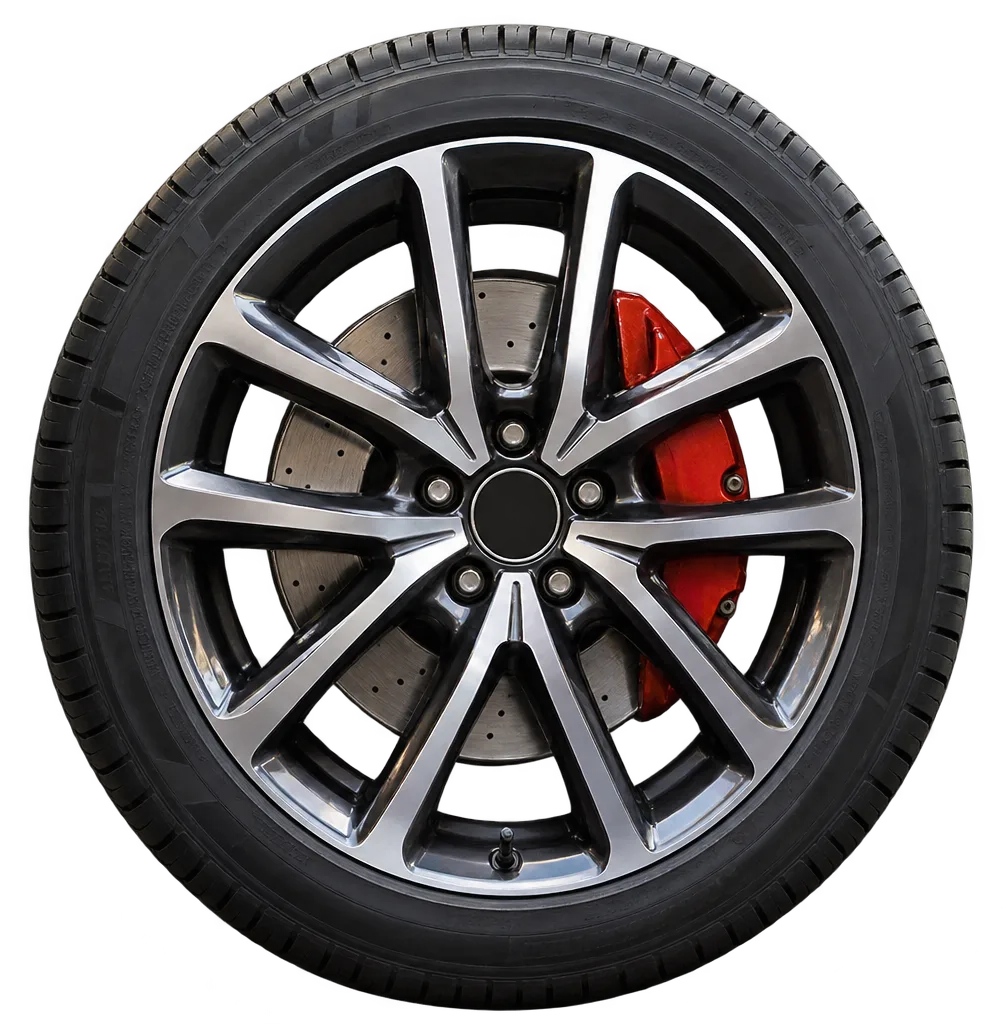
Concerns weight distribution in the rotating wheel-and-tyre assembly.
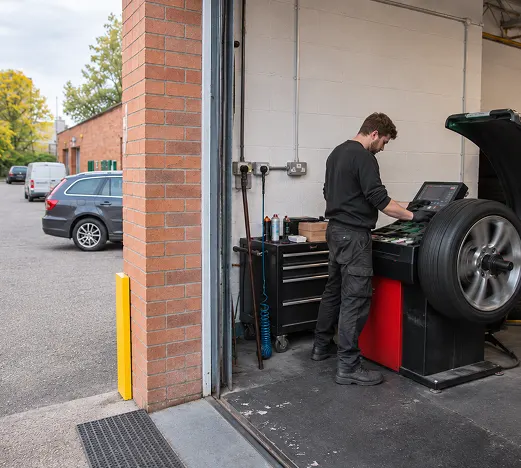
Wheel balancing addresses weight distribution around the wheel-and-tyre assembly. If vibration or uneven tyre behaviour is noticeable, balancing may be one area worth checking—but it is not the only possible cause.
Small differences in weight distribution can affect how a wheel-and-tyre assembly rotates. Balancing aims to correct that imbalance, helping the assembly rotate more smoothly.
These signs can also be caused by other tyre, wheel, alignment or suspension issues. Inspection is more useful than guessing from one symptom.
Concerns weight distribution in the rotating wheel-and-tyre assembly.
Concerns wheel geometry and how the wheels are positioned relative to the vehicle and road.
Explore wheel alignment →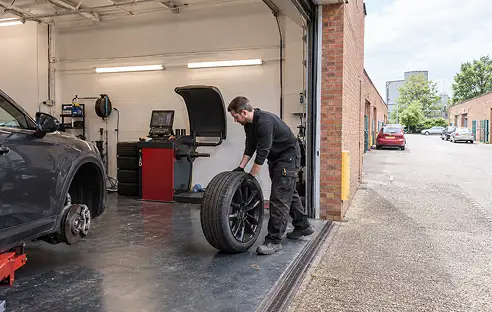
When tyres are changed, balancing may be relevant to the completed wheel-and-tyre assembly. Ask AOT what is appropriate for your fitting.
Tyre FittingAOT’s Sandy garage gives local motorists somewhere to investigate wheel-and-tyre vibration without assuming imbalance is automatically the cause.
Areas We CoverGet directions ↗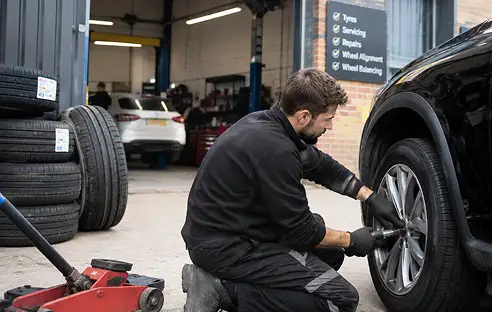
Possible signs include steering vibration, vibration at certain speeds, uneven tyre wear or reduced ride comfort, but these symptoms can have other causes too.
No. Balancing concerns weight distribution in the rotating wheel-and-tyre assembly; alignment concerns wheel geometry.
It may be considered after tyre work or when symptoms suggest the wheel-and-tyre assembly should be checked.
No. Vibration can have several causes, so inspection is important.
Contact AOT with the tyre fitting requirement and ask whether balancing is appropriate for the work being arranged.
Explain when the vibration occurs and any recent tyre work so AOT can consider wheel balancing as part of the appropriate inspection.